
Vintage Omega movements, identified and parted out.
No repairs, no restorations. Just the right answer and the right parts. Look up your Omega in our database and find out what you've got.
No repairs, no restorations. Just the right answer and the right parts. Look up your Omega in our database and find out what you've got.
No email, no sign-up. Same database the paid reports come from.
Need it in writing, for a sale or a purchase? The $75 report — nothing to pay until I confirm the photos can answer it.
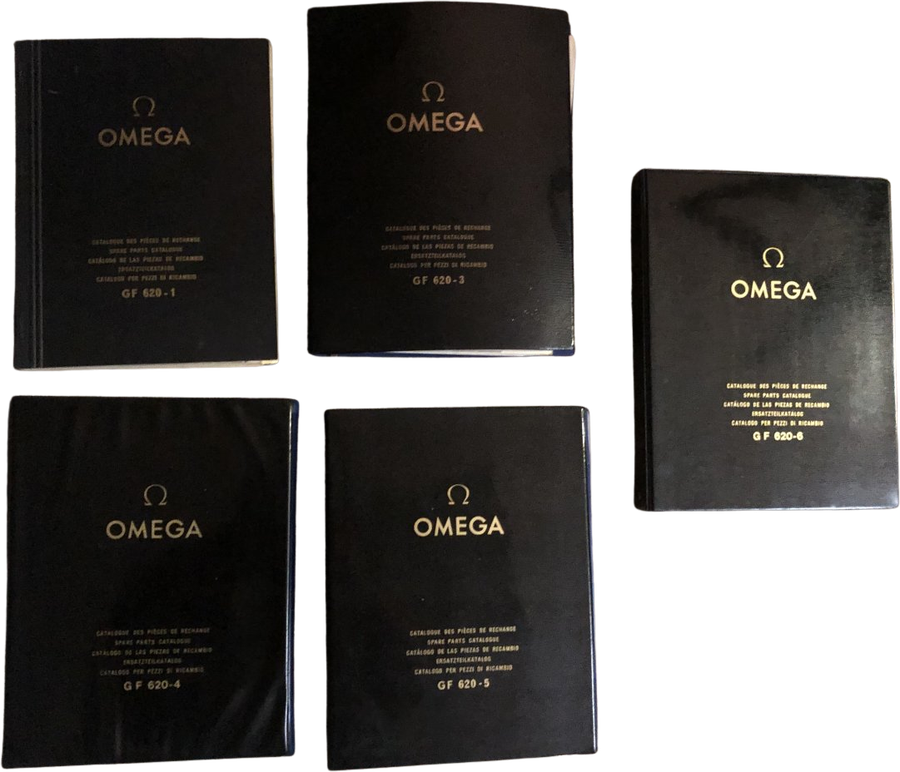
Omega's own factory spare-parts catalogues — the GF 620 series — and the American Watchmakers Institute microfiche set, about 1,200 frames of parts identification and technical bulletins. Volumes 620-1, 620-3 and 620-5 are on the shelf here and the 620-4 sections are held; 620-6 and the microfiche set arrive in October. Photographed and typed by hand into a database. Every line of a report is cited to the volume it came from. Not copied from somebody else's website.
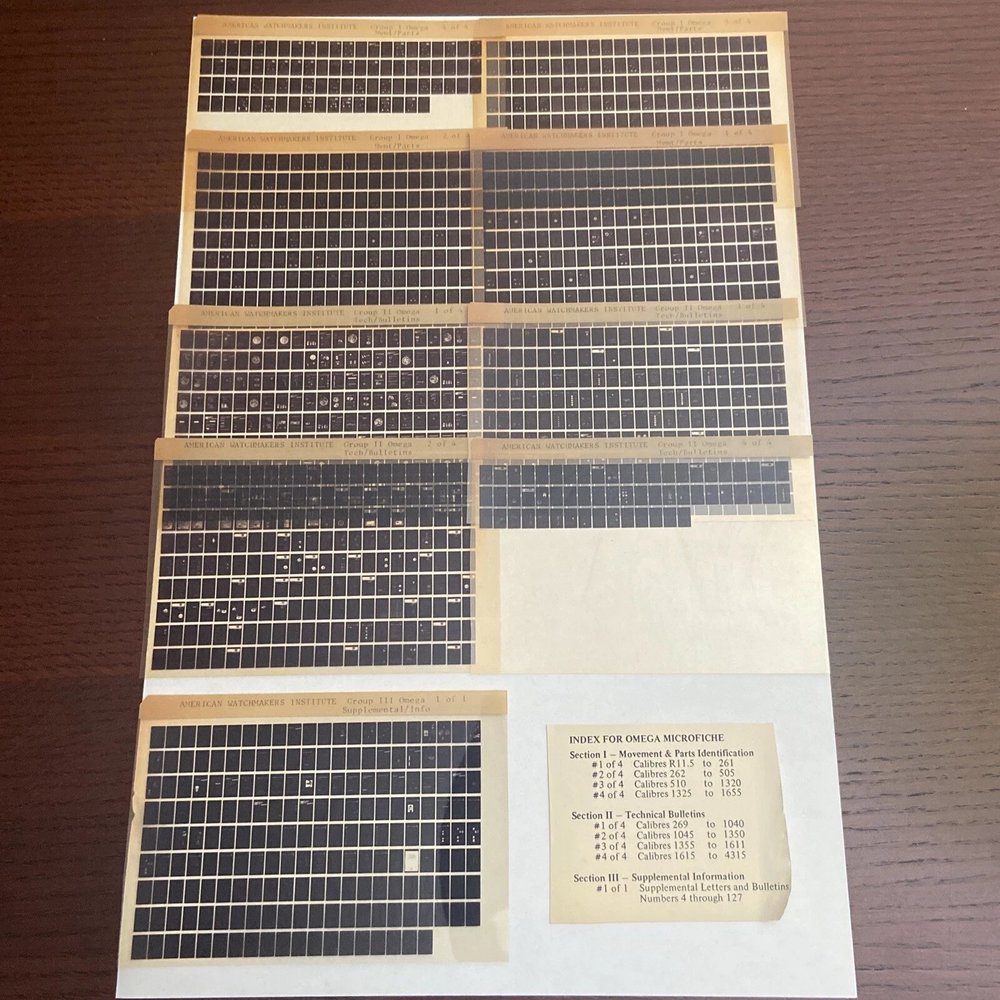
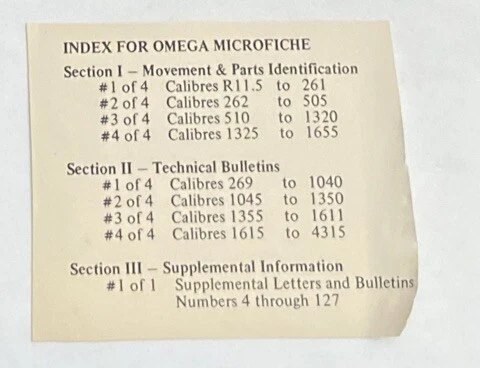 AWI Omega microfiche, set of nine — parts identification to calibre 1655, technical bulletins to 4315. Arriving October.
| Movement | Omega cal. 565, 24 jewels T1 · factory sheet |
| Serial | 28.4M — 1969 T2 · stamping |
| Case ref. | 166.032, stainless |
| Case built for | cal. 562 / 565 — match |
| Crystal | PZ 5116 (per 2012 case sheet) |
| Value as watch | US$620 – 780 |
| Value as parts | US$310 |
What it is, which calibres, which references, what it's worth. One page per model.
Started with one Omega I couldn't identify and got tired of guessing. Built a database so I'd never guess again.
Now it's a breaker's yard — movements in, parts out, and every one of them named right.
The love for Omega watches took me down this road, and now there's a place to identify what you really have, and a treasure of Omega part interchangeability waiting at Watch Breaker.
Selling and want the asking price to hold up? Buying and want to know before the money moves? The watch stays where it is.
GET YOUR WATCH IDENTIFIED — $75Nothing to pay until I confirm it's answerable